
/2026/05/13/473407064.jpg "Measuring the Investment Competitiveness of Indonesia’s Oil and Gas Sector")
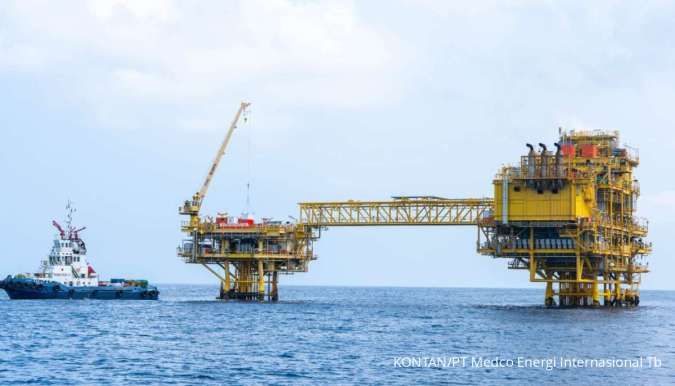
KONTAN.CO.ID - Amid increasing global energy competition and ongoing geopolitical tensions, the availability of oil and gas to meet energy demands has become a key priority for many countries. As one of the world’s upstream oil and gas investment destinations, Indonesia continues to strengthen its approach to remain attractive to global energy companies compared to other producing nations.
To support this initiative, the Indonesian Petroleum Association (IPA), together with its appointed consultants, has conducted a benchmarking study. This study provides an objective assessment of Indonesia's investment climate attractiveness against seven other producing nations, including the USA (Gulf of Mexico), Angola, Australia, Brazil, Guyana, Malaysia, and Vietnam.
The urgency to enhance upstream investment competitiveness is evident from the current national energy landscape. Although 2025 oil lifting reached 605,000 barrels per day (meeting 100% of the state budget target), this figure only supplies about one-third of the average daily fuel consumption of 232,417 kiloliters. A heavy reliance on mature fields—which face a natural decline of 16%–20% annually—underscores Indonesia’s desperate need for fresh investment to drive aggressive exploration.
Data shows that out of the US$ 16.1 billion upstream investment target for 2025, realization for new exploration has only reached US$ 500 million. This indicates a massive growth opportunity for global investors to tap into dozens of unexplored basins across the archipelago.
Through this study, the IPA has formulated five key pillars that determine upstream investment attractiveness:
● Legal Clarity: Establishing a stable legal foundation as the primary requisite for investors to commit large-scale, long-term capital.
● Ease of Doing Business: Transforming bureaucracy and simplifying permitting processes to ensure strategic projects can move swiftly from discovery to production.
● Commercialization: Offering flexible contract schemes and competitive monetization certainty, particularly to encourage the development of idle fields.
● Adaptive Fiscal Incentives: Providing attractive fiscal stimulus to encourage the adoption of advanced technologies, such as multi-stage fracturing (MSF), in previously inaccessible rock formations.
● Energy Transition: The implementation of technologies and regulations required for the upstream oil and gas industry to increase production in alignment with decarbonization efforts.
For the IPA, strengthening investment competitiveness is more than just a sectoral demand; it is a shared commitment to driving the national economy. Massive upstream investment will create a significant multiplier effect, from job creation to the strengthening of supporting domestic industries.
These efforts serve as a strategic "curtain-raiser" for the 50th IPA Convex. This event will serve as a platform to integrate government policy with global investor expectations and shape Indonesia's energy future. By refining these five pillars, Indonesia is optimistic about turning the challenge of declining production into an opportunity for sustainable economic growth.
Cek Berita dan Artikel yang lain di Google News
Editor: Indah Sulistyorini